Tips from the team:
- Enjoy a swim: Unlike most high-altitude lakes in Kyrgyzstan, Issyk-Kul’s water warms up pleasantly in summer.
- Stop in Cholpon-Ata at the end of the day: The local hot springs are perfect for unwinding after a long drive.
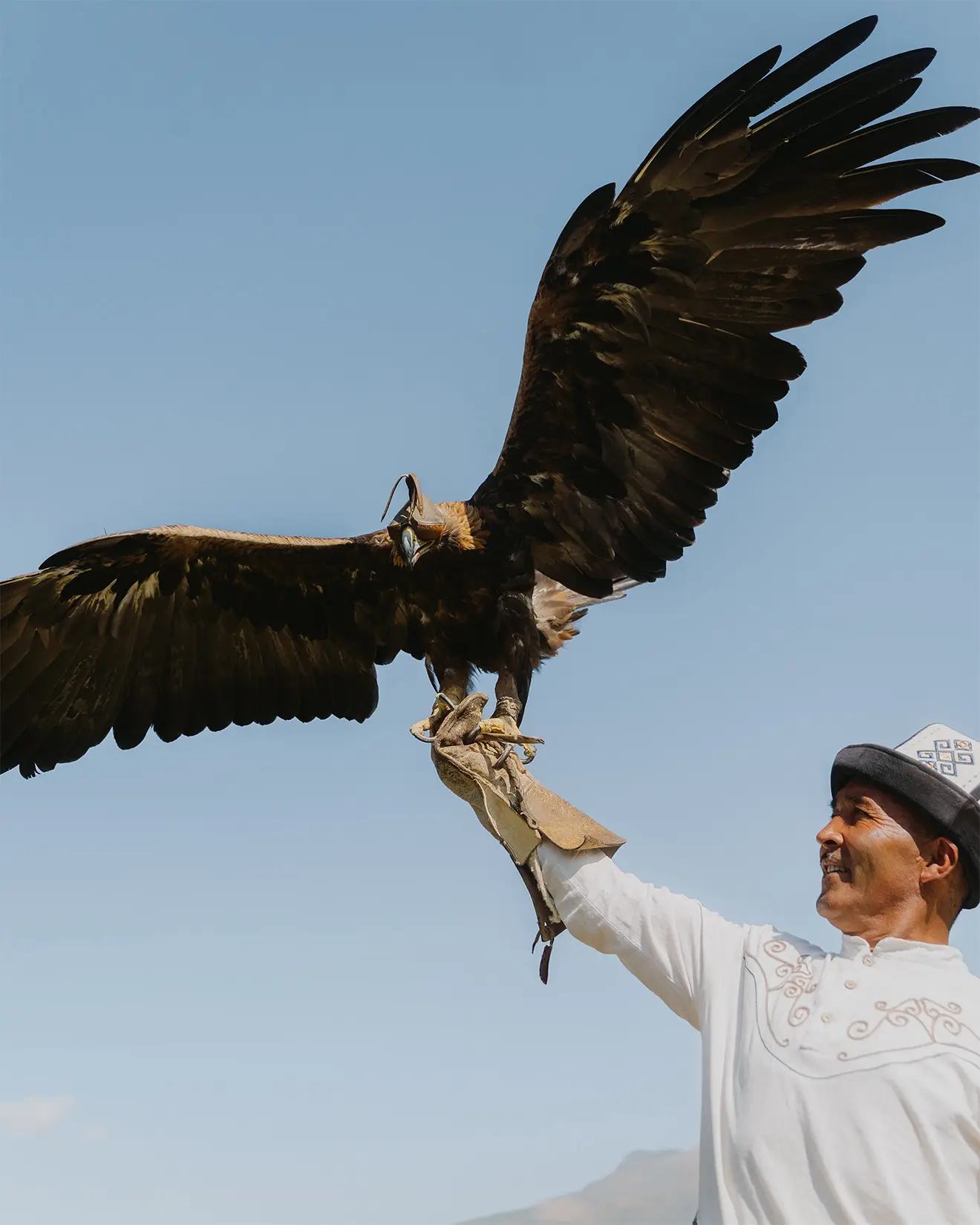
- Book the eagle-hunting demonstration in advance: This show in Bokonbayevo is very popular during the high season.
- Don’t worry about the altitude: At 1,607 metres, Issyk-Kul is much lower than Song-Kul, so there’s no risk of altitude sickness.
- Plan to spend several days there: The lake is huge, and each shore has its own character.
Issyk-Kul Lake: Everything You Need to Know About Kyrgyzstan’s Famous Lake
Almost every road trip in Kyrgyzstan reaches a point where the mountains give way to water, and there’s a good chance that moment will come on the shores of Issyk-Kul. This vast high-altitude lake is one of the country’s best-known natural wonders, and not without reason. At Kyrgyzstan Nomads, we spend several days along its shores, which is exactly why we’re sharing everything you need to know here: key figures, fascinating stories and the best things to do in the area.
What is Lake Issyk-Kul?
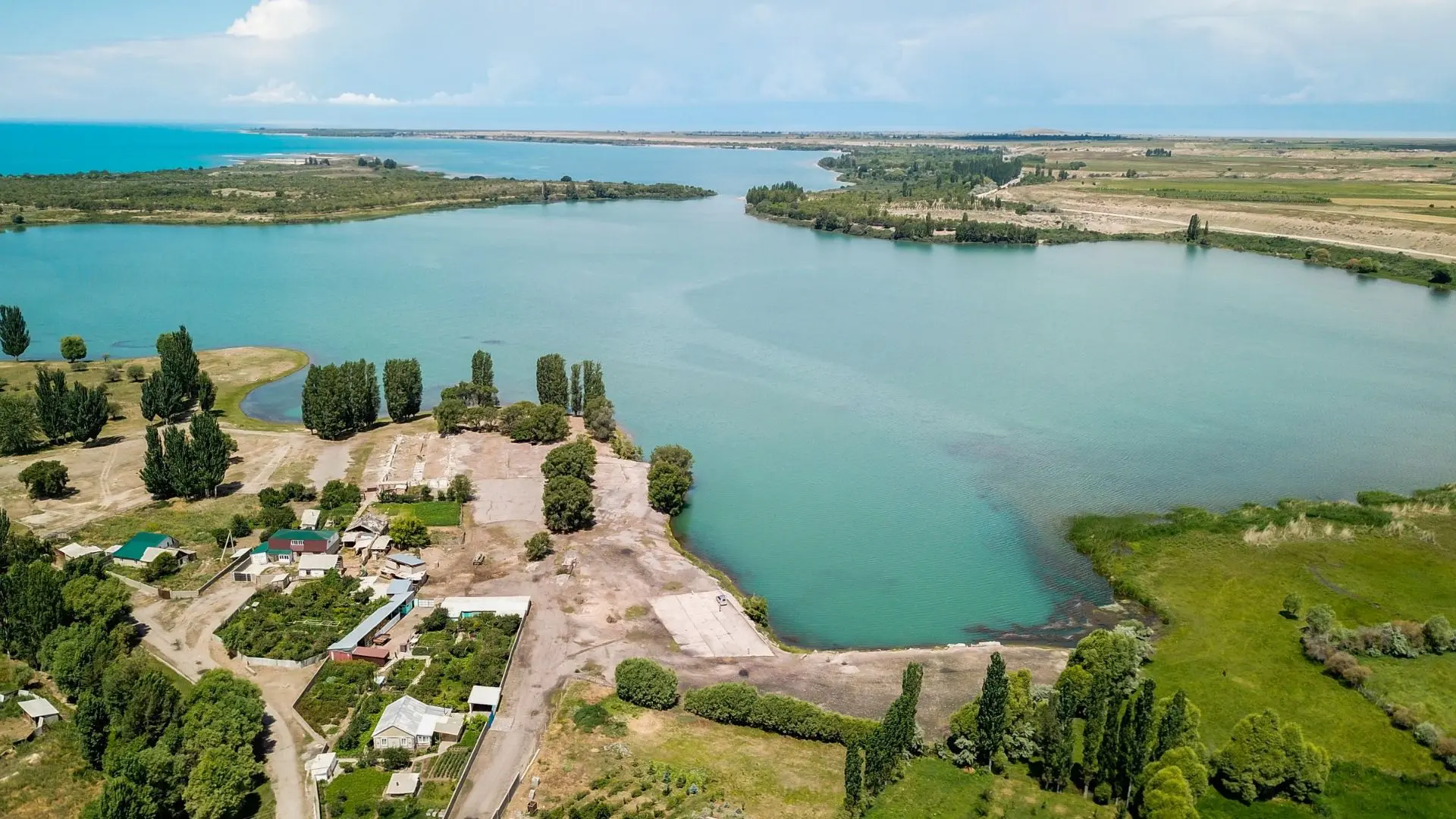
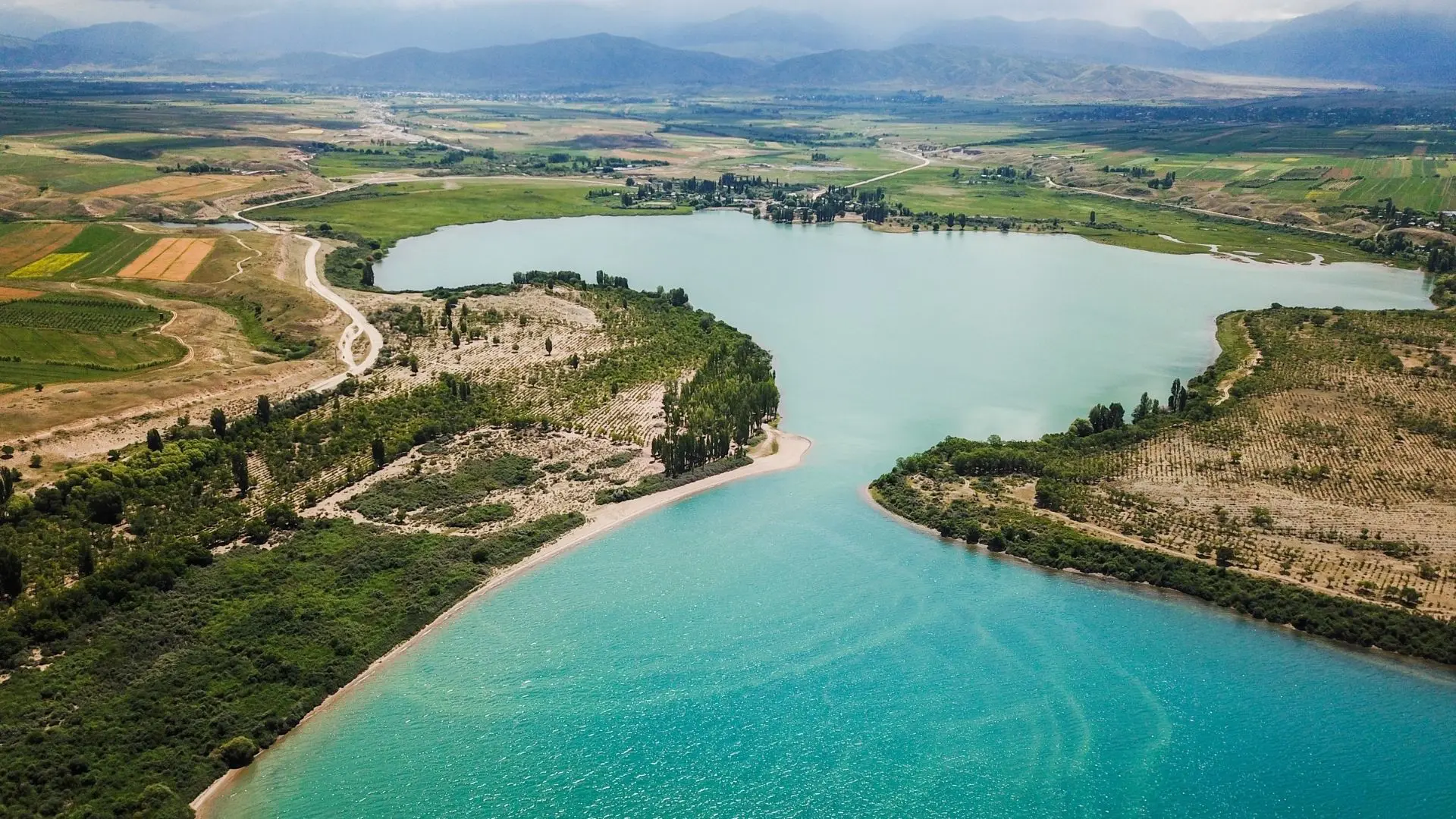
At 6,236 km², Issyk-Kul is the world’s second-largest high-altitude lake, just behind Lake Titicaca in South America. It sits at an elevation of 1,607 metres, surrounded by the snow-capped peaks of the Tian Shan, and reaches a maximum depth of 668 metres, making it the eighth-deepest lake in the world. It is also one of the largest salt lakes on the planet, second only to the Caspian Sea.
Issyk-Kul has no outlet to the sea. All the water flowing into it from the rivers either evaporates or remains trapped in the basin. Over the centuries, a slight concentration of salt has built up, around 0.6%, much lower than seawater but enough to give the lake its unique character.
Why does Lake Issyk-Kul never freeze?
One of the most surprising facts about this lake is that, despite its altitude and the harsh mountain winters around it, Issyk-Kul almost never freezes. Its name says it all: “Issyk-Kul” literally means “hot lake” in Kyrgyz. The name comes from the hot springs that have fed the lake for centuries, with its salinity adding to the effect by acting as a natural antifreeze. While the surrounding plains are covered in snow during winter, the waters of Issyk-Kul simply remain liquid.
The City Submerged Beneath the Lake
Issyk-Kul also hides a secret beneath its waters. Divers have discovered the remains of sunken villages in several places, including Toru-Aygyr, a 13th-century settlement that sank into the lake in the 15th century after earthquakes. Archaeologists have since found centuries-old coins and bronze objects there, silent witnesses to a time when Silk Road caravans passed through the area. This discovery has fed local legends for centuries about an entire city lying at the bottom of the lake, a story that still captures the imagination.
What to Do Around Lake Issyk-Kul
The shores of Issyk-Kul have something for everyone, which is exactly why the lake is an essential stop on almost every road trip through Kyrgyzstan. Here are a few places you really shouldn’t miss:
- Cholpon-Ata, on the northern shore, is the cultural heart of the region. It’s home to the hippodrome, where thousands of spectators gather during the World Nomad Games to watch kok-boru, Kyrgyzstan’s traditional national horseback sport. At the Petroglyph Museum, you can see thousand-year-old rock carvings, while the local hot springs, which can reach 43°C, are perfect for relaxing after a long day on the road.
- the Grigorievka and Semenovskoye gorges, two lush valleys close to the northern shore, are ideal for a short hike through conifer forests and alpine meadows between road-trip stops.
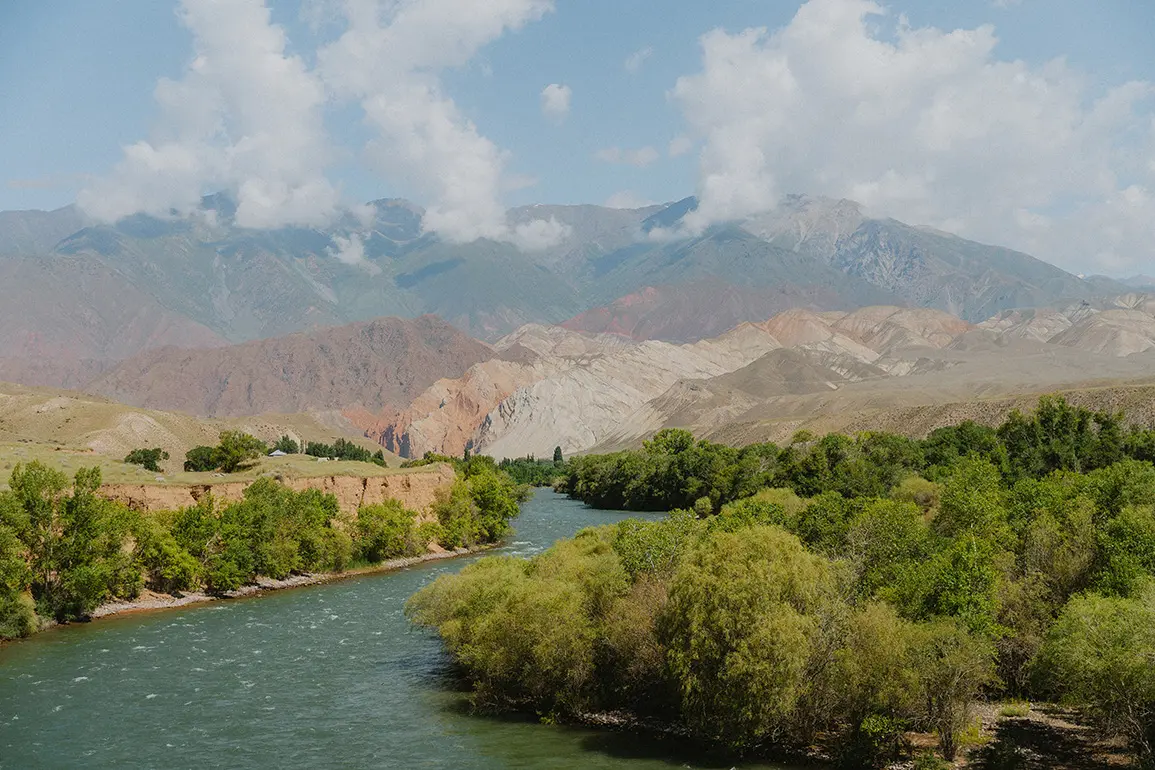
- the Skazka Canyon, on the southern shore, where wind and time have sculpted the red sand into a landscape straight out of a fairy tale. Nearby, Bocha Beach is the perfect place for a refreshing swim.
- Bokonbayevo, also on the southern shore, is known for its traditional eagle-hunting demonstrations, an ancient Kyrgyz art that is still celebrated here. With Kyrgyzstan Nomads, you can add this demonstration as an optional activity.
- Karakol, at the eastern end of the lake, is the perfect base for hiking in the Tian Shan, with a unique blend of Russian Orthodox and Islamic architecture.
Practical tips for visiting Lake Issyk-Kul
Swimming: in summer, the water reaches pleasant temperatures, and the sandy beaches of Cholpon-Ata and Balykchy are popular with both tourists and Kyrgyz families.
Best time to visit: from June to September, when the weather is most stable and the surrounding mountain passes are generally accessible.
Altitude: at 1,607 metres, Issyk-Kul is much lower than Lake Song-Kul, for example, so there is virtually no risk of altitude sickness here.
Accessibility: the lake lies in the east-central part of the country, about a 300 km drive from Bishkek, making it a natural stop on almost any road trip through Kyrgyzstan.
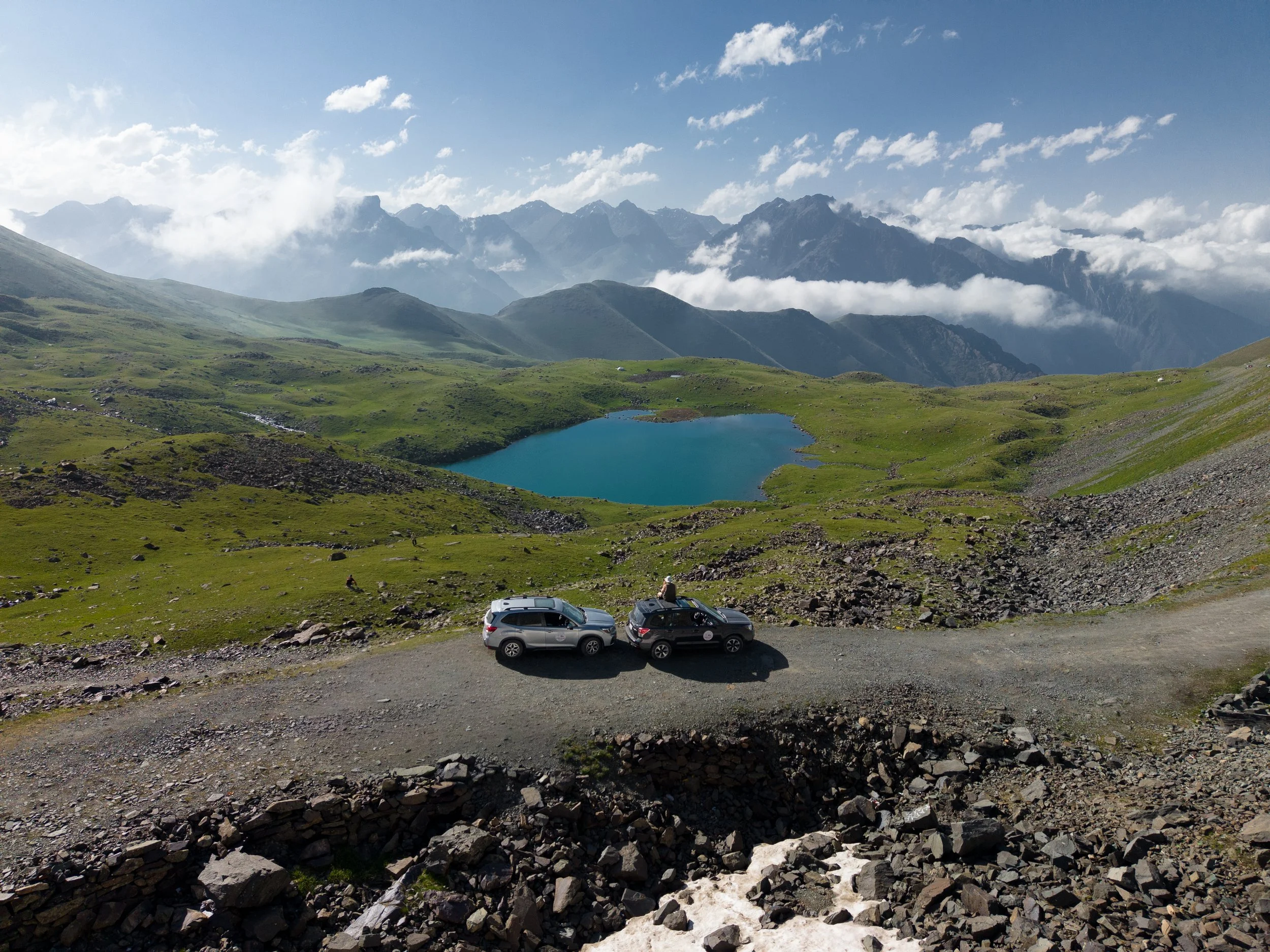
At Kyrgyzstan Nomads, Issyk-Kul is part of the standard itinerary: you spend the night in Cholpon-Ata, then continue to Karakol and the southern shore, exploring the lake from every angle over the course of a few days.
In summary
Issyk-Kul is much more than a stopover along the way. It’s one of the places that makes a road trip through Kyrgyzstan feel complete. At Kyrgyzstan Nomads, visiting the lake is an integral part of the itinerary, with plenty of time to explore it at your own pace.
Want to experience this adventure for yourself? Check out all the available dates and book your spot on an unforgettable road trip through Kyrgyzstan.