Tips from the team:
- Travel between June and September: This is the only window when the mountain passes, often above 3,000 m, are clear of snow.
- Adjust to the altitude gradually: The first few days take you up quickly. Take your time, drink plenty of water, and listen to your body.
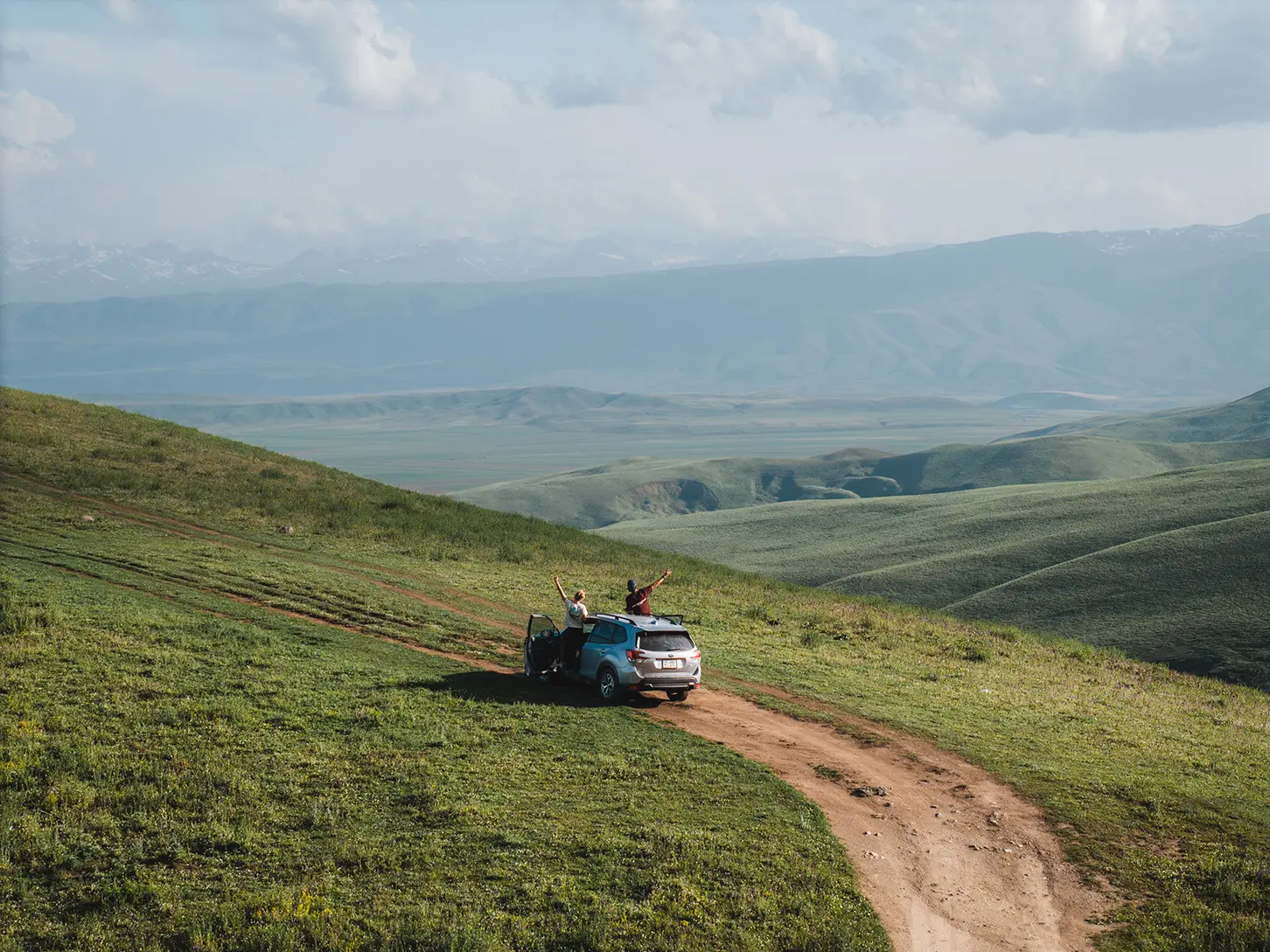
- A 4×4 is essential: Several parts of the route, including the climb to Song-Kul, follow unpaved roads at high altitude.
- Check your visa requirements: French, Belgian, and Swiss nationals can enter visa-free for up to 60 days.
- Book your flights early: When booking, make sure your flight times fit your road trip itinerary.
Road Trip in Kyrgyzstan: The Complete 10-Day Itinerary
What’s the best way to discover Kyrgyzstan? At Kyrgyzstan Nomads, we think we have the answer. Our 10-day itinerary was mapped out locally with people who know the country, taking you around 1,600 kilometres through some of its most beautiful corners. You’ll cross dizzying mountain passes, reach a lake at 3,000 metres above sea level, and discover red rock formations and a thousand-year-old minaret.
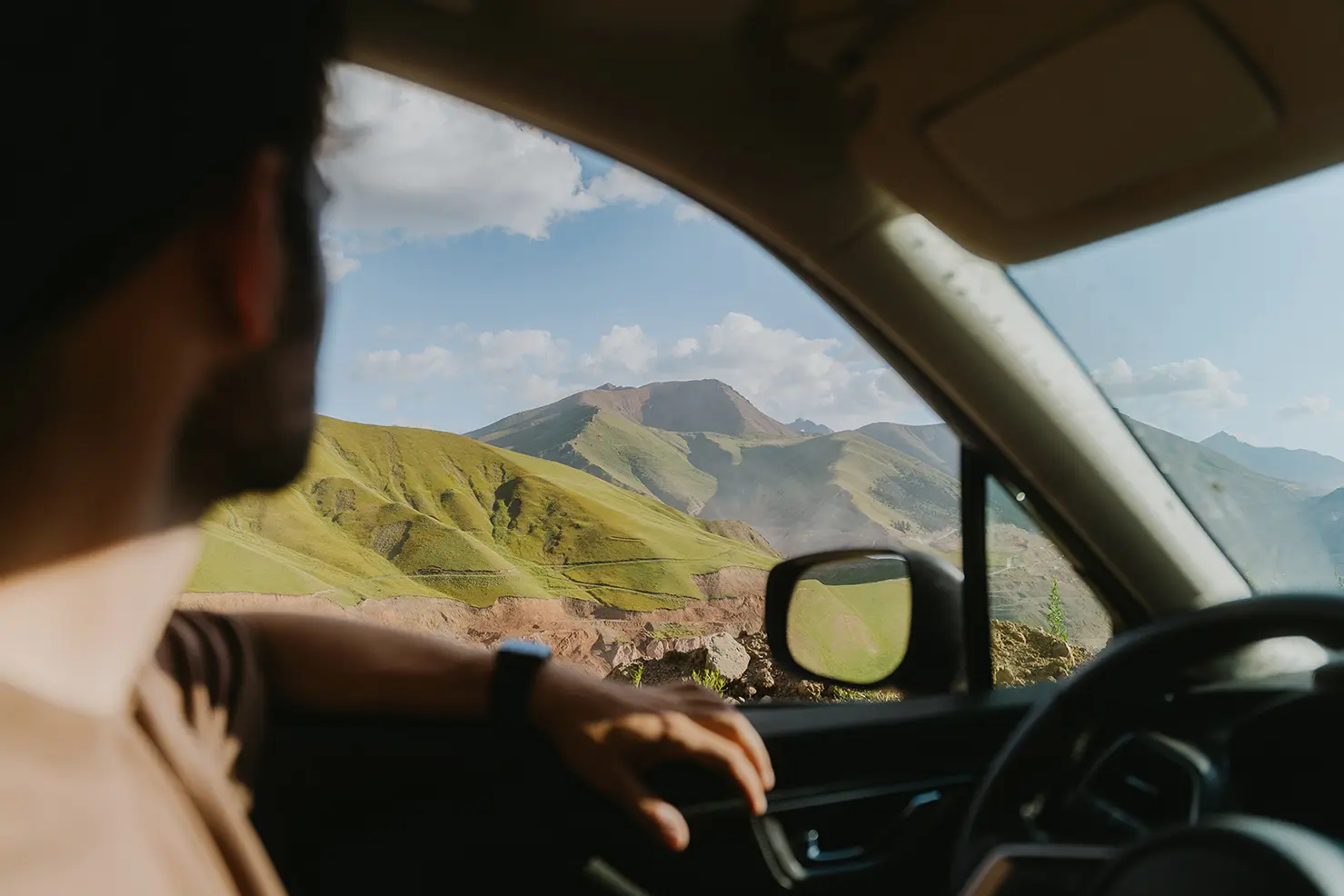
This isn’t a road trip viewed from an air-conditioned bus. You’ll be behind the wheel of your own 4×4, with a yurt, guesthouse, or welcoming local family waiting for you each evening.
Here’s the complete itinerary, day by day, through Kyrgyzstan’s most beautiful landscapes.
Days 1–2: Bishkek and the Too-Ashuu Pass
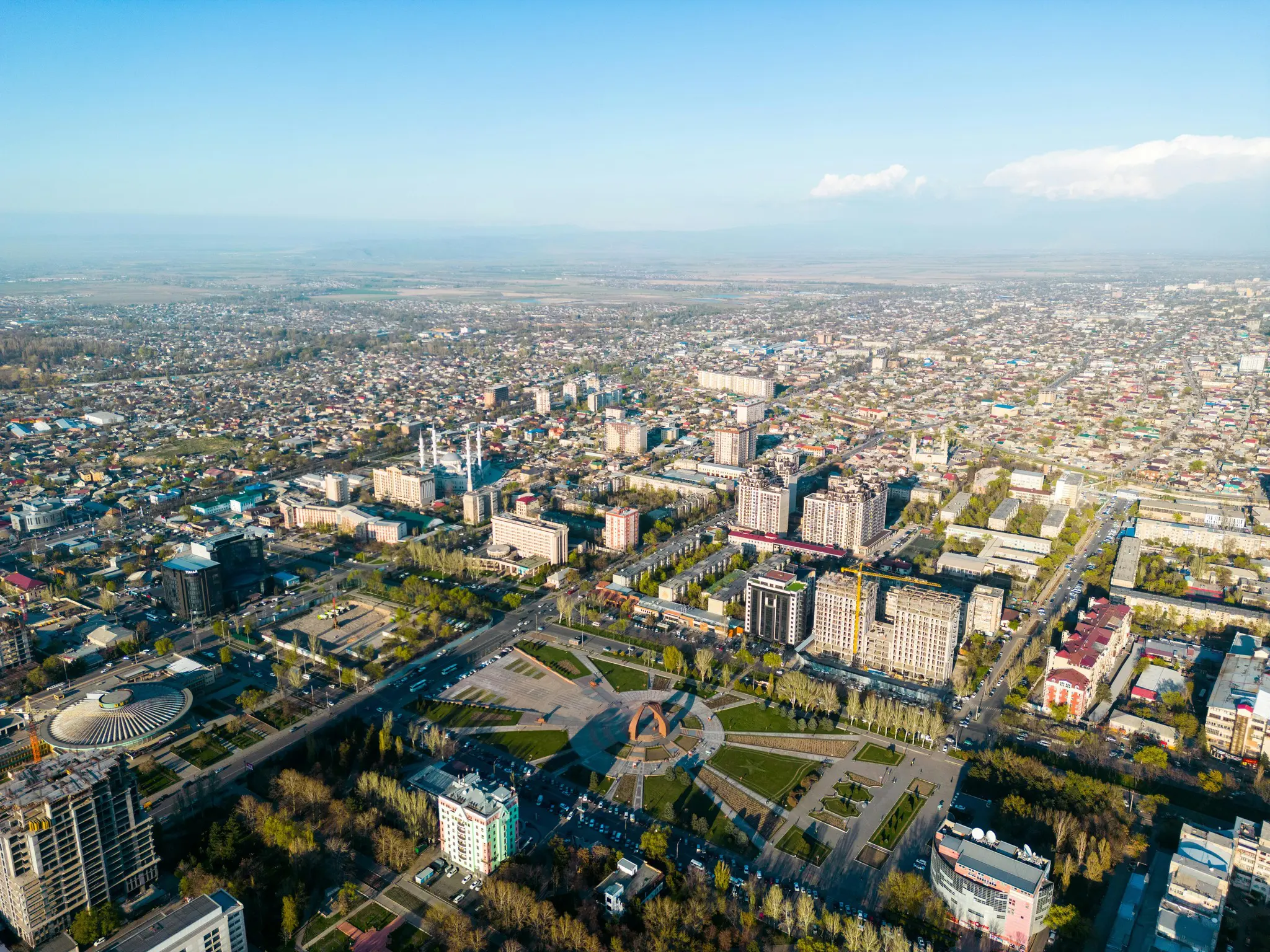
The journey starts in Bishkek, Kyrgyzstan’s lush, surprisingly laid-back capital. At Osh Bazaar, you immediately get a taste of local cuisine, from dried fruit to salty yogurt dumplings. On Ala-Too Square, a statue of Manas, the legendary hero of the epic of the same name, stands proudly, while an eternal flame burns beneath a granite yurt-shaped arch at Victory Square.
On day two, you cover another 200 km, crossing the Too-Ashuu Pass at an altitude of 3,586 metres. A 2.8 km tunnel built in the 1960s makes the crossing much safer. Near the summit lie the Sulutor Lakes, two small glacial lakes rarely visited by tourists and connected by a short hike. At the end of the day, you reach Kyzyl-Oi, an authentic village perched at 1,800 metres in the Kokomeren River valley, where you spend the night with a local family.
Days 3–4: Song-Kul, the heart of nomadic culture
Passing through the impressive Kokomeren Gorge and the remote Ak-Kol Lake, you then climb to the Moldo-Ashuu Pass, at nearly 3,350 metres. The landscape changes completely: arid hills give way to alpine meadows, and you can already feel the nomadic world of Song-Kul drawing closer.
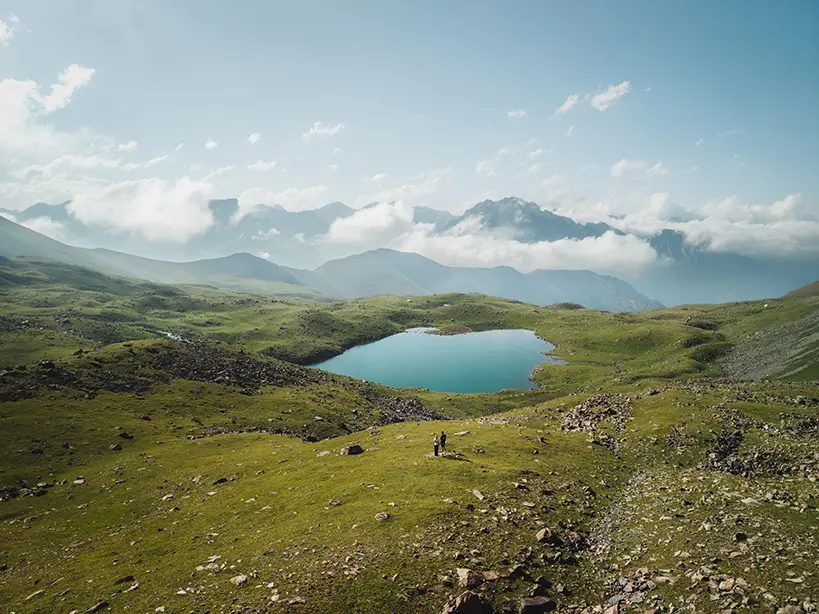
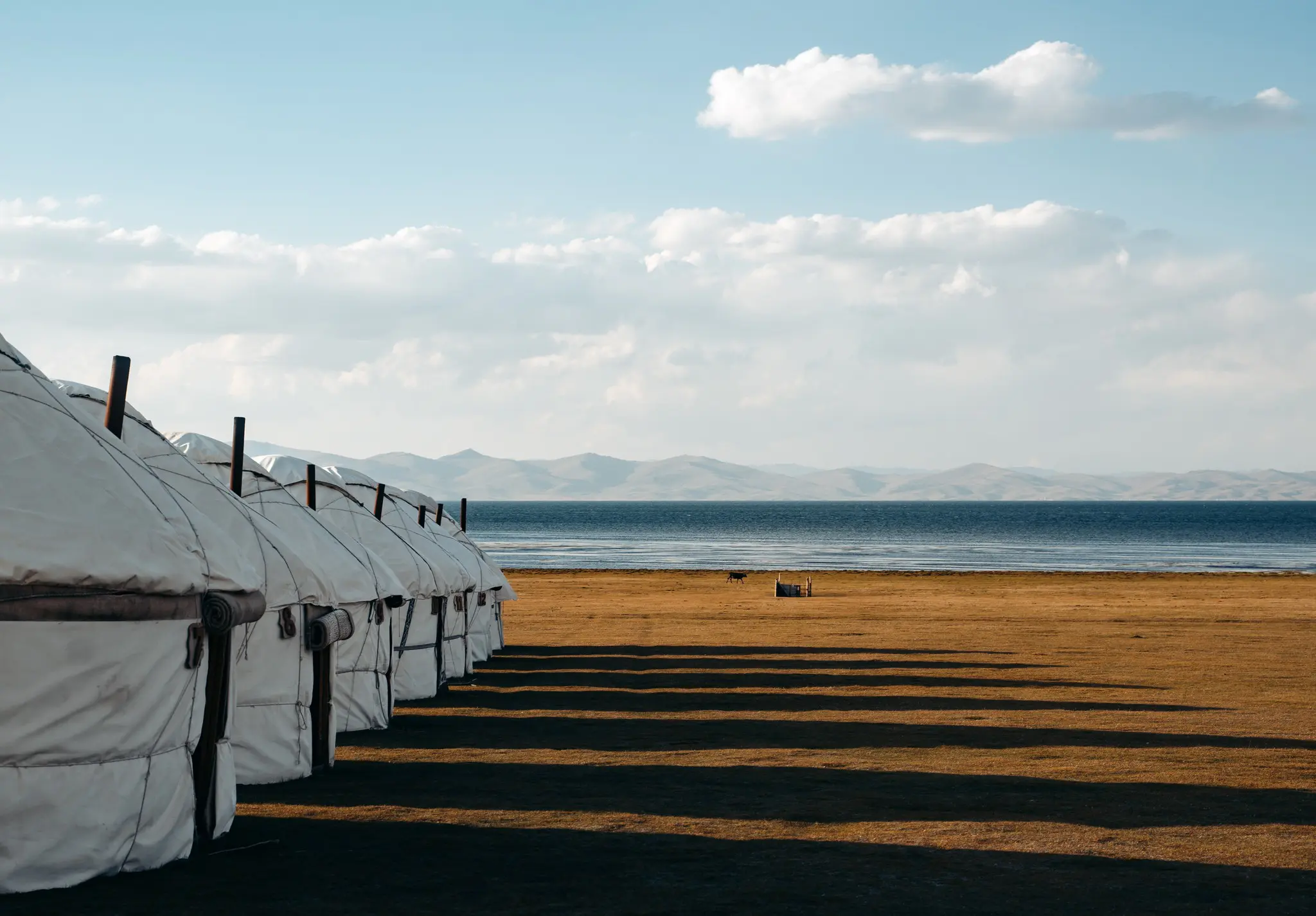
Perched at over 3,000 metres, this lake is undoubtedly the most iconic stop on any road trip in Kyrgyzstan. No trees, no villages, just endless meadows where nomadic families bring their herds for the summer. You spend two nights in a yurt beside the lake. During the day, set off on a two-hour horseback ride, or head to Tash-Tulga, where nine archaeological stone circles dating from the first century BC once served as ritual hearths. Kazhyr Ty Waterfall, hidden beneath Teskeytorpo Pass, is another popular stop.
At Kyrgyzstan Nomads, Song-Kul is an integral part of our fixed itinerary, and that is no coincidence: nowhere else will you experience Kyrgyzstan's nomadic way of life so closely.
Days 5–6: From Song-Kul to Issyk-Kul and Karakol
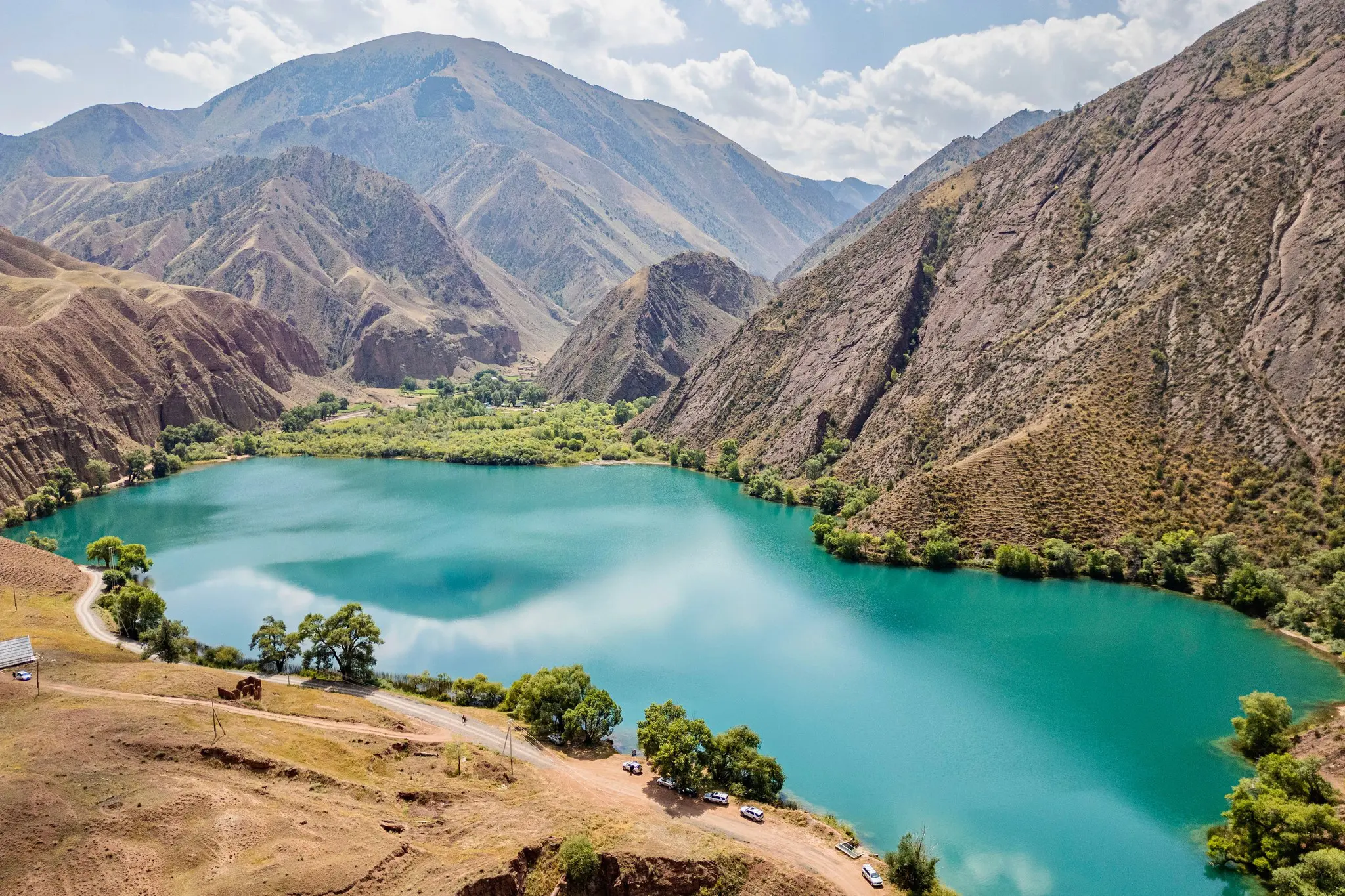
After Song-Kul, you descend via the Kalmak-Ashuu Pass (3,400 metres) towards Issyk-Kul, located at an altitude of 1,600 metres and one of the largest mountain lakes in the world. In Cholpon-Ata, on the northern shore, you’ll find the hippodrome, where thousands of spectators gather to watch kok-boru, the national equestrian sport, during the World Nomad Games. Afterwards, relax in the local hot springs, where temperatures can reach 43°C, or explore the thousand-year-old petroglyphs at the Petroglyph Museum.
The road then follows the shores of Issyk-Kul towards Karakol, a small town at the foot of the Tian Shan. Visit the 1895 Holy Trinity wooden church and the colourful Dungan Mosque, built between 1907 and 1910 without a single nail or screw. If you have some time, the Altyn Arashan valley is ideal for a roughly five-hour hike along the Arashan River.
Day 7: Jeti-Ögüz, Skazka Canyon and eagle hunting
This day alone shows just how varied a road trip in Kyrgyzstan can be. Your first stop is Jeti-Ögüz, meaning “the seven bulls”: towering red rock formations that, according to legend, are petrified bulls. Next come the Barskoon waterfalls, tucked away in a lush valley, followed by Skazka Canyon, literally the “fairy-tale canyon”, where wind and time have sculpted the red sandstone into a landscape straight out of a storybook.
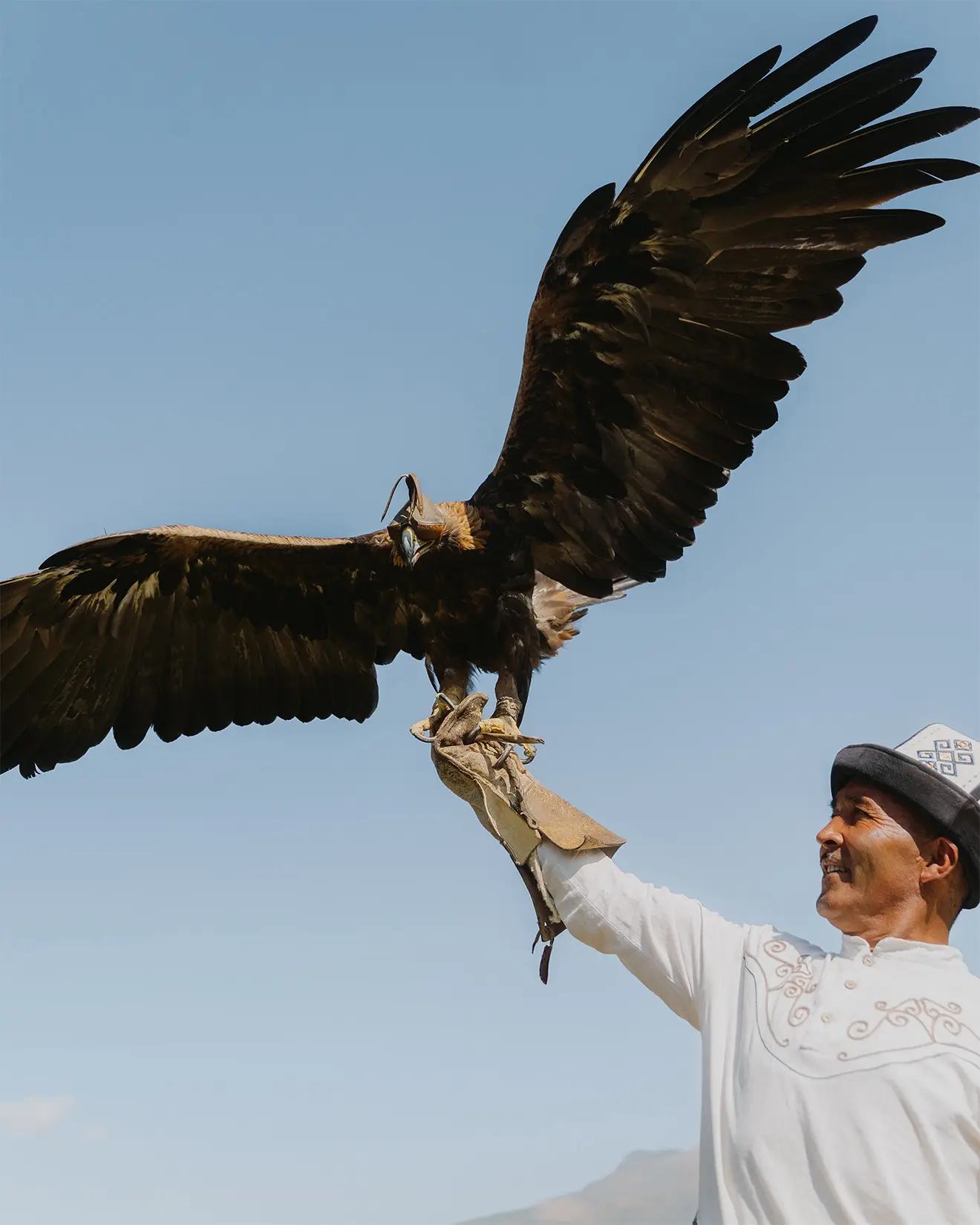
The day ends in Bokonbayevo, where you watch a demonstration of traditional eagle hunting. This ancient art, known as burkutchy, has been passed down through generations for centuries and remains one of the most iconic traditions of the Central Asian steppes. You spend the night in a yurt camp on the shores of the lake.
Days 8–10: Canyons, rafting, and the Burana Tower
On the way to the Chong-Kemin Valley, you pass through a series of dry, colorful canyons: Aksai Canyon, Kok-Moynok Canyon (reminiscent of America’s Antelope Canyon), and Konorchek Canyon, whose rock formations are worthy of Death Valley. For a little extra adventure, you can go rafting on the Chon-Kemin River, with rapids ranging from level 2 to 4.
The final stop before Bishkek is the Burana Tower, the remains of a 10th-century minaret near the vanished ancient city of Balasagun, once an important stop along the Silk Road. Originally 47 meters tall, the tower now stands at just 24 meters after being damaged by earthquakes. Along the way, you’ll also pass Kegeti Waterfall, which is over 20 meters high and tucked away among pine forests where horses graze.
Practical tips for this Kyrgyzstan road trip
Total distance: just over 1,600 km covered over 10 days.
Best time to go: from June to September, when the high mountain passes are free of snow.
Vehicle: a 4×4 is essential. Several passes are over 3,000 metres high, and the roads are often unpaved.
Altitude: take it easy during your first few days at altitude and drink plenty of water.
Visa: French, Belgian and Swiss travellers can stay in Kyrgyzstan visa-free for up to 60 days.
Accommodation: a mix of guesthouses, a hotel and yurt camps, all booked in advance and included.
When you travel with Kyrgyzstan Nomads, you don’t have to plan a thing yourself: a 4×4, a roadbook detailing the full itinerary and accommodation for each stop are all included. You can also easily book flights that fit perfectly with your travel plans.
Ready for your Kyrgyzstan road trip?
From a mountain pass at 3,586 metres to a lake where thousands of stars surround you at night, this itinerary showcases Kyrgyzstan at its best. A road trip through Kyrgyzstan along this route takes you through a succession of landscapes you won’t find anywhere else. With Kyrgyzstan Nomads, you’ll drive the entire route yourself, from the first kilometre in Bishkek to the final yurt by the water.
For everything you need to know before you set off, including when to go, what to do and where to go, check out our ultimate guide to road-tripping in Kyrgyzstan.
This itinerary is the result of work carried out on the ground with local people who know every mountain pass, every track and every host family along the way. The result is a journey that takes you far beyond the beaten track, without ever having to worry about the logistics.
Ready to experience this adventure for yourself? Check out all the available dates and book your spot on an unforgettable road trip through Kyrgyzstan.